| CGIAR Multifunctional Landscapes Newsletter | Issue 01 | 2026
Thriving Landscapes. Resilient Futures. |
|
|
A Message from the Program Director |
|
|
Why Landscapes - and Why Now |
|
|
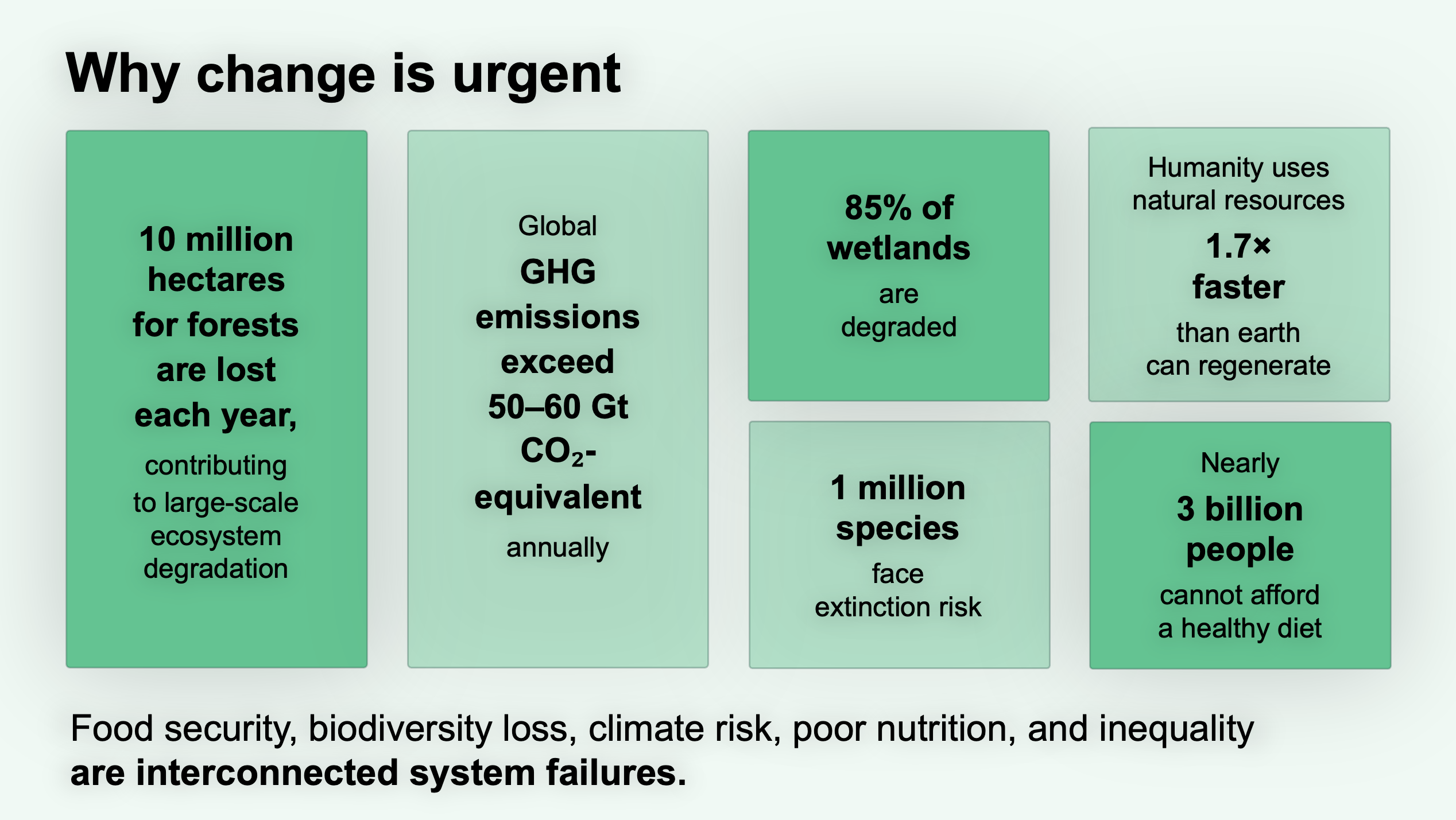
Across the world, food systems are under pressure. Agricultural expansion has increased production in some regions, yet soils are degrading. Protected areas have expanded, yet biodiversity loss continues. Climate mitigation efforts are accelerating, yet livelihoods remain fragile.
Integrated systems approaches are crucial to address these deeply entangled challenges.
The CGIAR Multifunctional Landscapes (MFL) Science Program with its 12 implementing CGIAR Centers and more than 70 partners embraces a systems approaches at a landscape scale. We see landscapes as living systems where ecological processes, production systems, markets, institutions, and social dynamics intersect.
In this newsletter, we share our vision for thriving landscapes and resilient futures. The work ahead is ambitious. Yet a growing body of evidence suggests that landscape approaches can help align production, conservation, and livelihoods, offering practical pathways toward more sustainable, equitable, and climate-resilient food systems
|
|
|
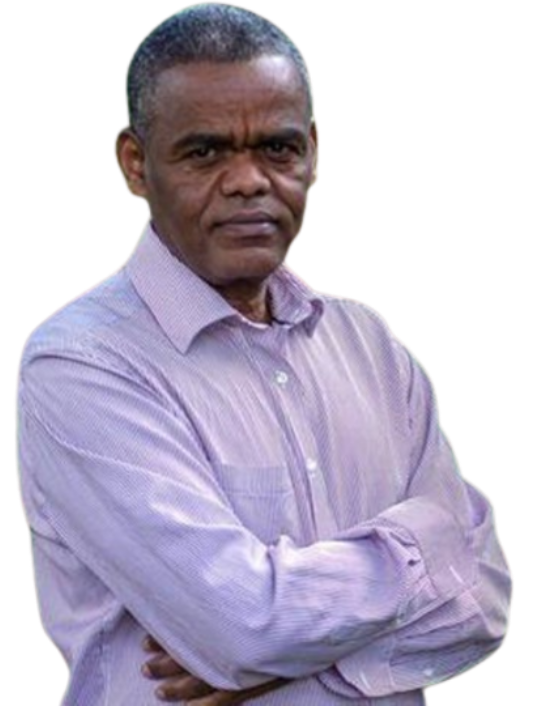
| — Lulseged Tamene
Director,
CGIAR Multifunctional Landscapes
Science Program
|
|
|
|
Multifunctional Living Landscapes |
|
|
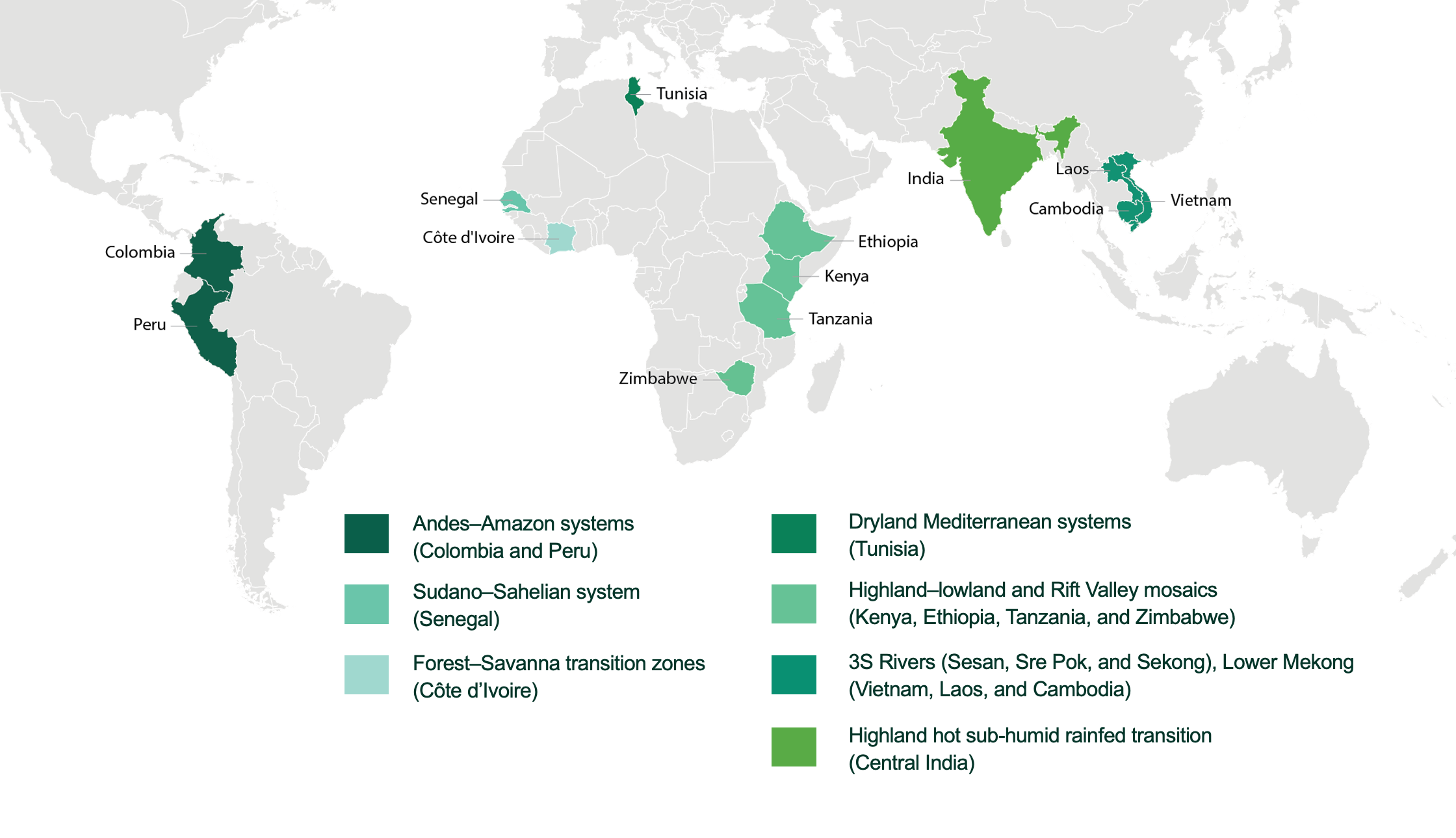
In 2025, the Program team agreed to prioritize its research for impact in a set of Multifunctional Flagship Living Landscapes. These are strategically selected geographies where pressures on food and aquatic ecosystems, and livelihoods are most acute and where planetary boundaries are under strain.
Within these landscapes, the Program operates with its partners in specific territories and in an integrated manner to co-design and implement complementary solutions that deliver measurable outcomes.
|
|
|
Focus geographies for Multifunctional Living Landscapes |
|
|
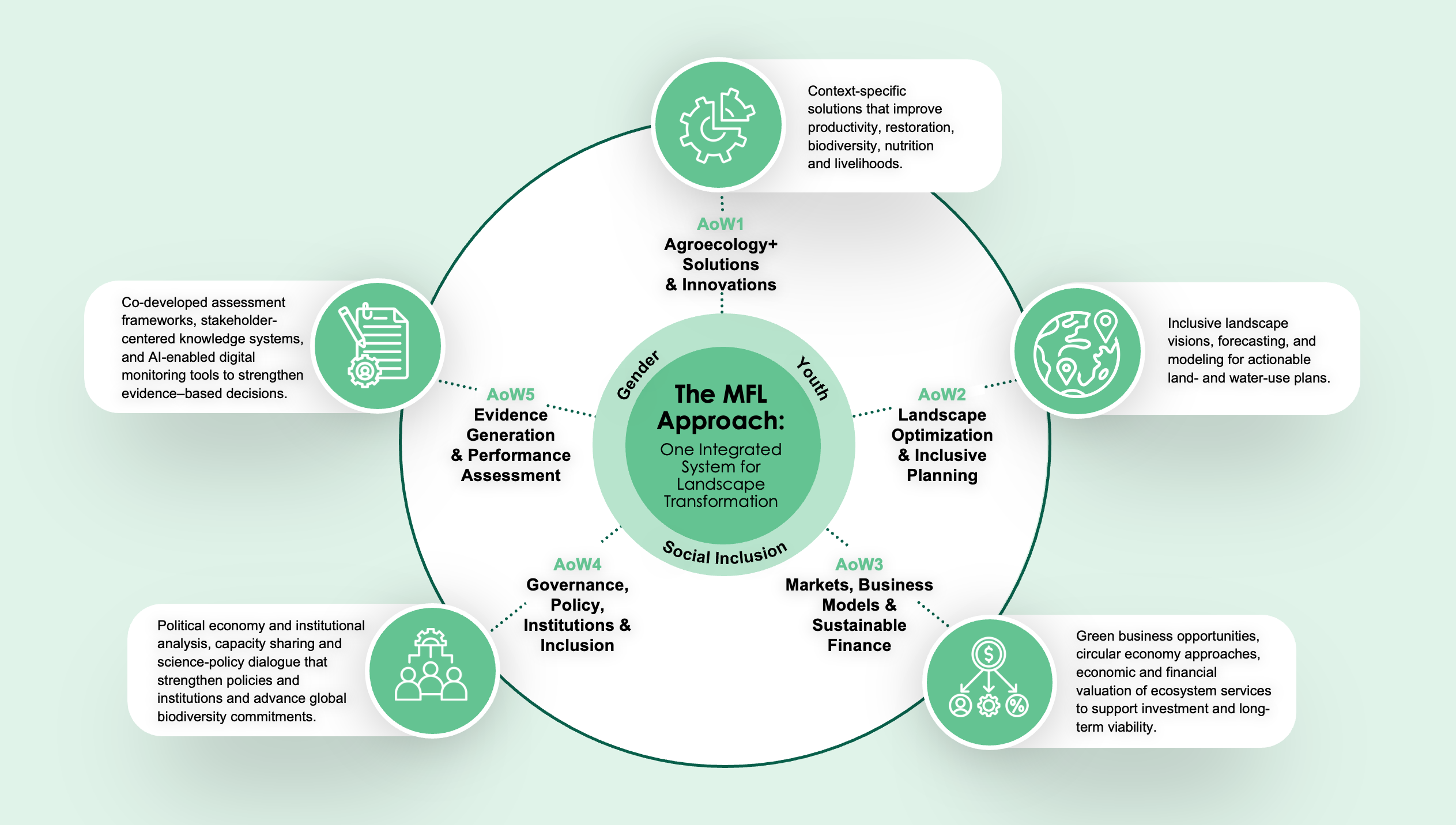
The MFL Approach: One Integrated System for Landscape Transformation |
The Program envisions landscapes that are shaped and managed by diverse stakeholders, who co-design technological, socioecological, and institutional innovations, engaged in policy processes, underpinned by inclusive governance and effective planning. To achieve this vision, the Program is structured around five interdependent Areas of Work (AoWs) that function as a single integrated architecture.
|
|
|
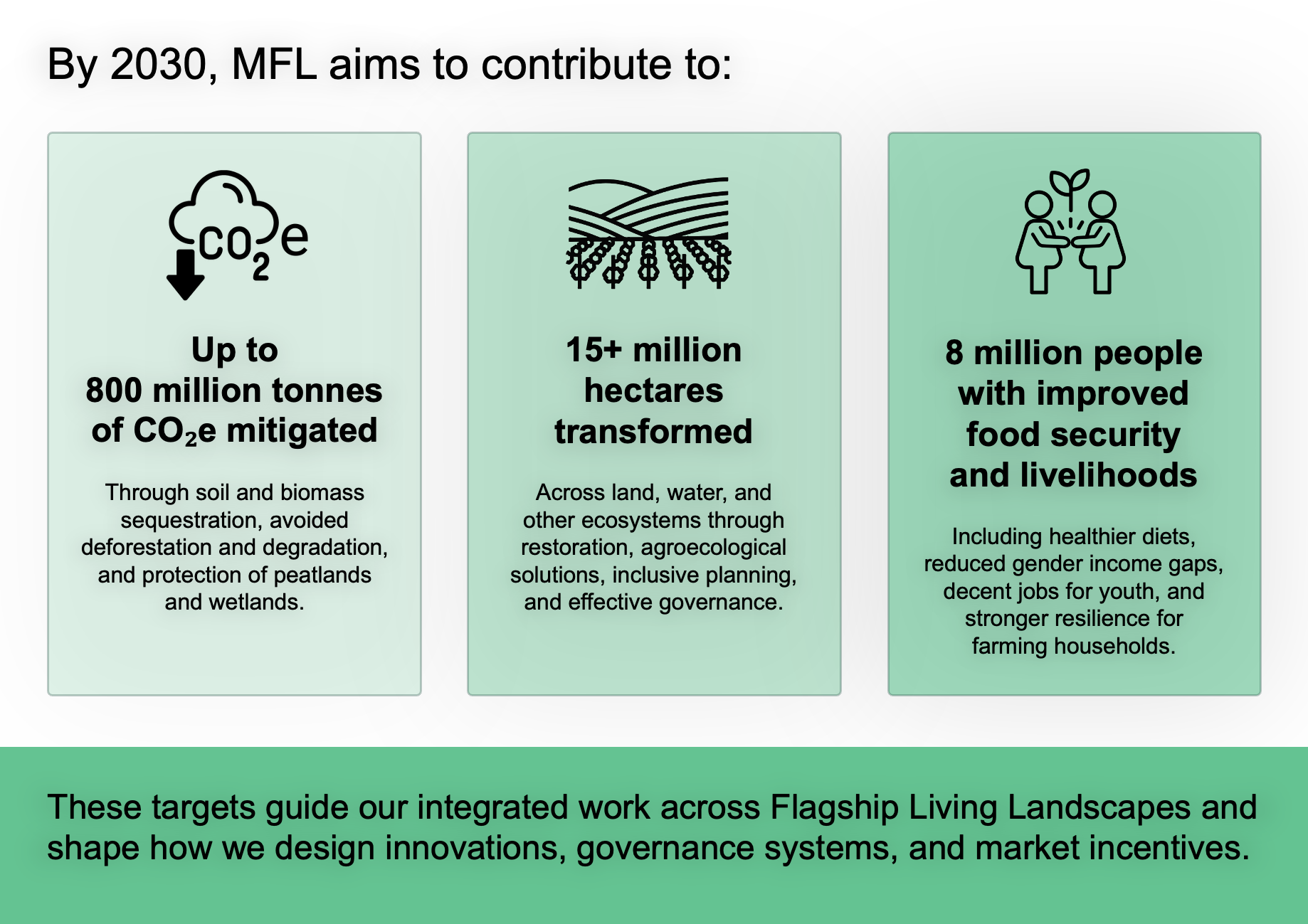
Advancing Toward Our 2030 Ambition
|
|
|
Stories from the field: Progress Toward 2030 |
|
|
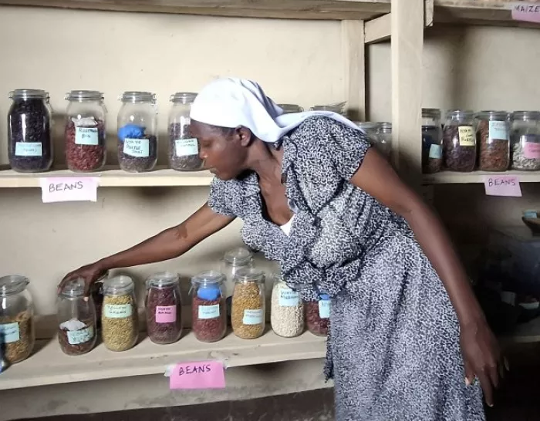
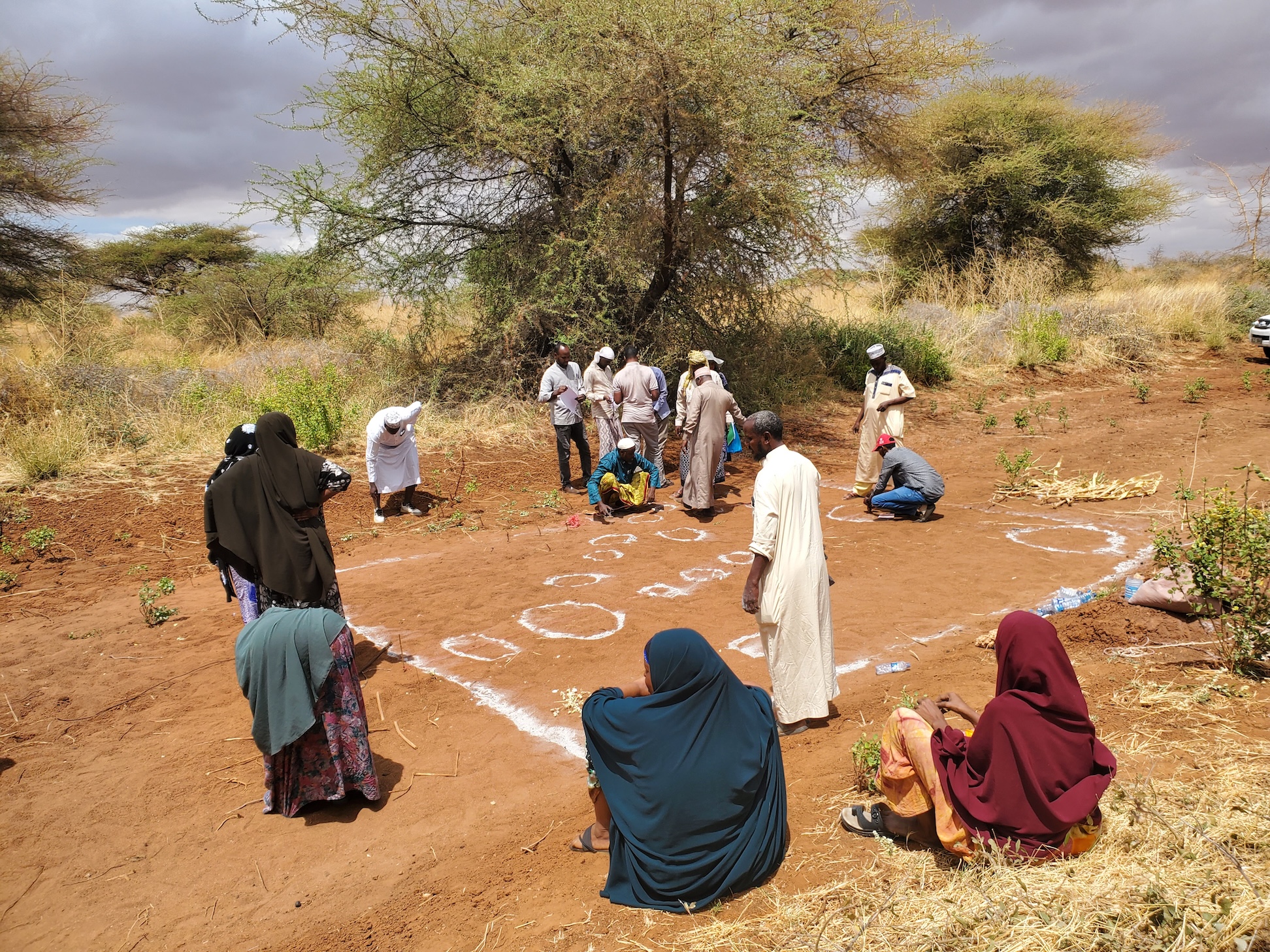
| Kenya: Restoring Landscapes, Reclaiming Seed Sovereignty |
|
|
|
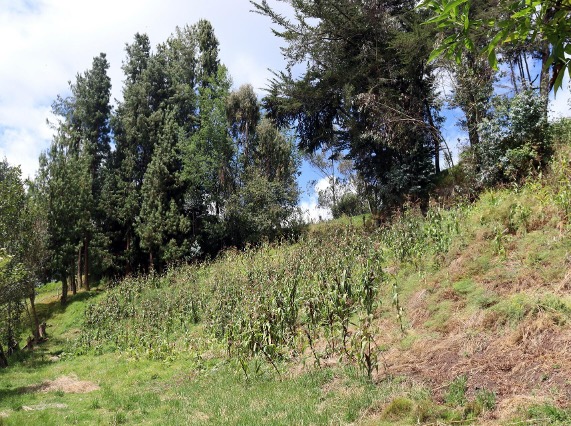
Colombia: Agrobiodiversity & Territorial Governance in Cumbal |
| |
|
Rangelands & One Health: Ethiopia & East Africa |
|
|
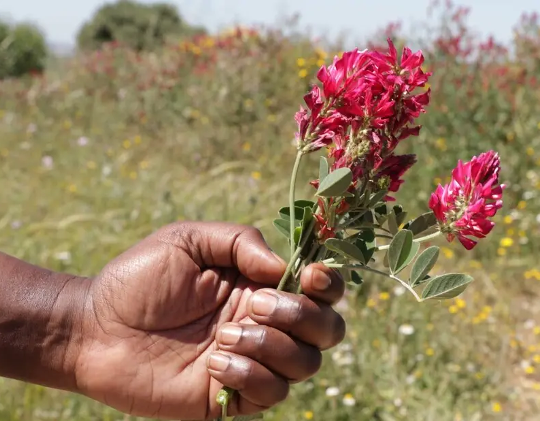
| Tunisia: Silvopastoral Systems & Market Transformation |
|
|
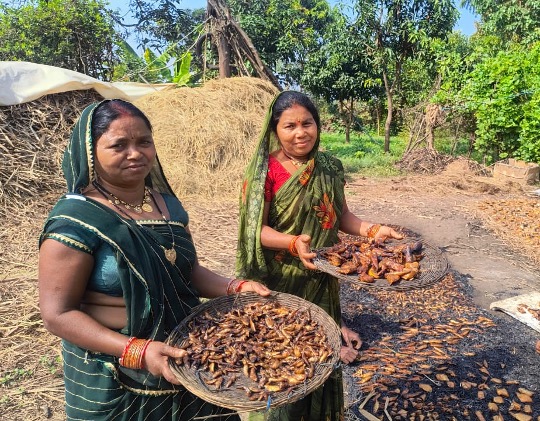
| India: Agroecology, Aquatic Systems & Landscape Transitions |
|
|
|
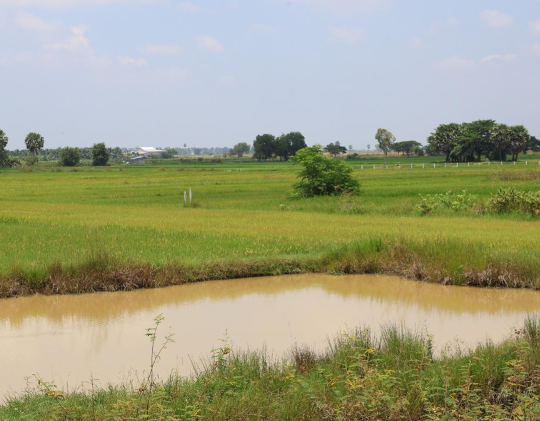
Cambodia & Vietnam: Integrated Rice–Field Pond Systems & Agroecological Diversification |
| |
| The Rio Nexus & Global Advocacy |
|
|
You are receiving this newsletter because you are part of the CGIAR Multifunctional Landscapes community or have expressed interest in our work.
To receive future editions and updates, please sign up here.
If you prefer not to receive further communications, you may opt out here. |
CGIAR – The largest global agricultural innovation network. |
|
|
CGIAR MFL research is being implemented by a multi-disciplinary team of researchers and other specialists, which includes CGIAR researchers from the Alliance of Bioversity and CIAT, CIMMYT, CIP, ICARDA, IFPRI, ILRI, IITA, IWMI and Worldfish as well as researchers from CIFOR and ICRAF; CIRAD; and various national and local partner organizations, in the target countries. The Progamme also cooperates with key partners for scaling and impact and national authorities. CGIAR MFL is part of the CGIAR 2030 Research and Innovation Portfolio focuses on transforming food, land, water, and ecosystems. By treating landscapes as the unit of transformation, MFL generates actionable science through Multifunctional Living Landscapes, where integrated solutions are co-designed, governed, financed, and measured with partners.
|
CGIAR @ 2026. All rights reserved. |
|
|
|