|
|
|
From Ulaanbaatar: CGIAR at UNCCD COP17, Week One |
|
|
: Science, partnerships and early negotiation insights from the first week of COP17. |
|
|
CGIAR at UNCCD COP17: Week One |
|
|
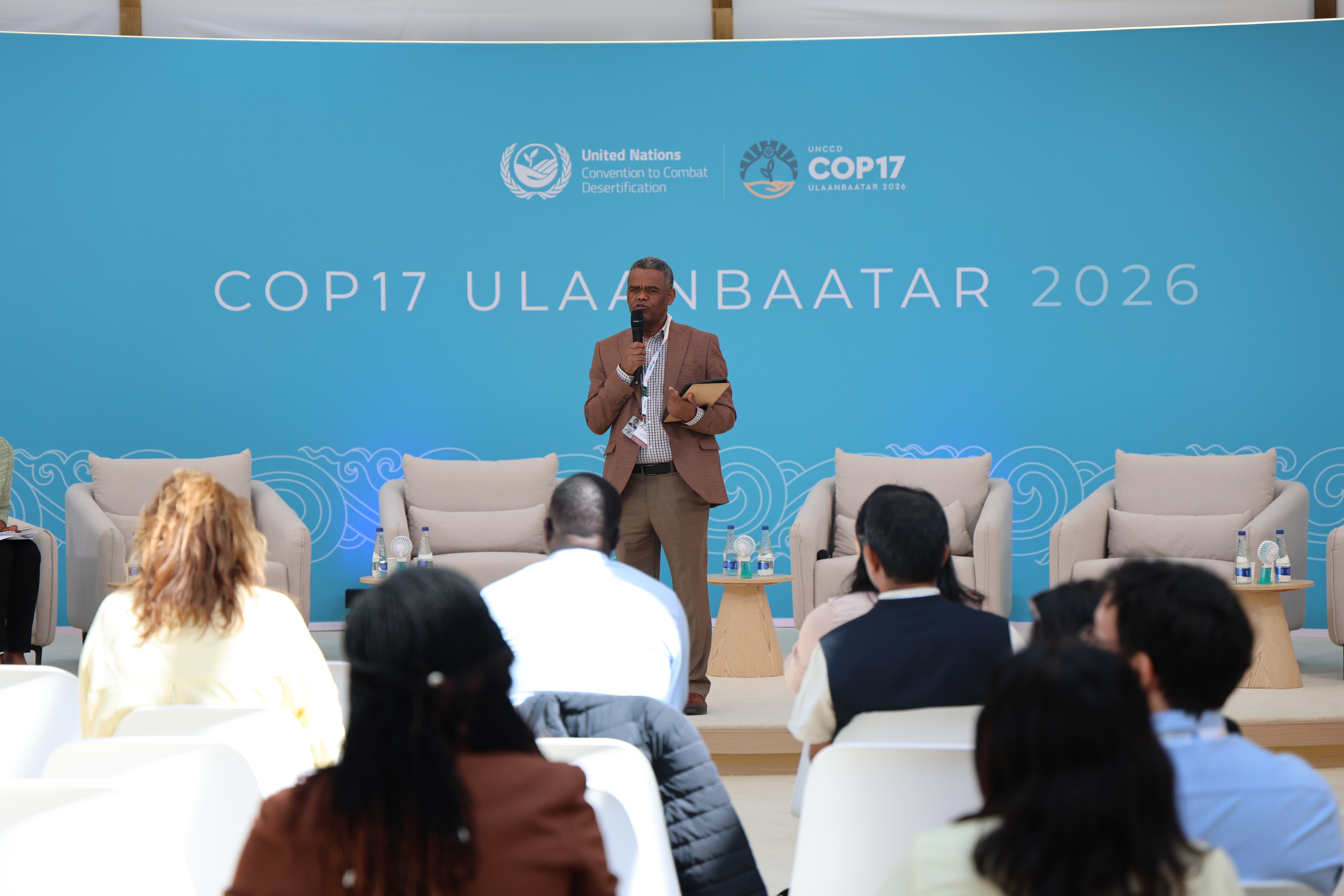
Caption: Lulseged Tamene Desta, Director of CGIAR Multifunctional Landscapes Science Program, speaking at the Flagship innovations for resilient landscapes: restoring land, managing drought and transforming food systems on 20 August 2026. Photo: ILRI/Frank Mwangi.
|
|
|
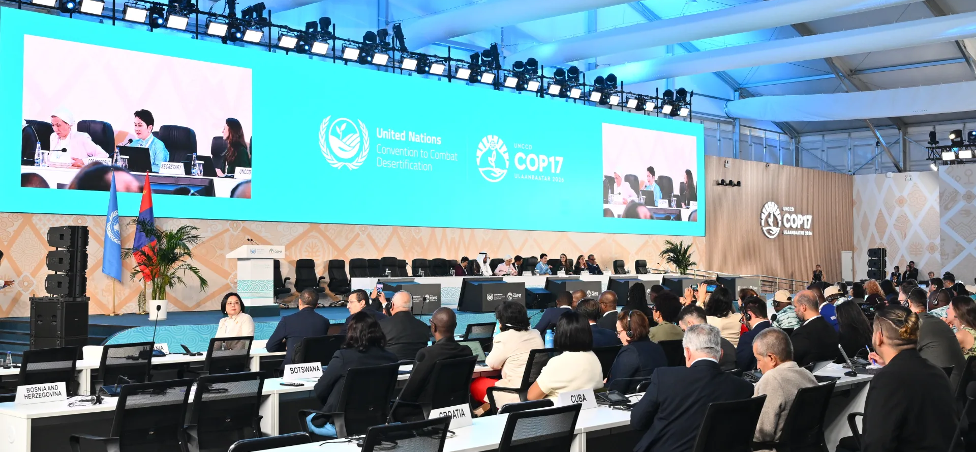
The first week of UNCCD COP17 brought one message into sharp focus: restoring land requires more than isolated projects or individual technologies. Progress depends on connecting science with policy, finance and the knowledge of the people who manage landscapes every day.
With CGIAR’s participation coordinated by the Multifunctional Landscapes Science Program, CGIAR and close partners scientists contributed evidence to formal negotiations, convened partners and showcased practical solutions for healthier soils, resilient water and food systems, restored rangelands and stronger rural livelihoods. As negotiations moved into contact groups, CGIAR continued tracking what the emerging language could mean for science and implementation.
|
|
|
Three moments from Week One
|
|
|
1. Proven innovations, brought together for greater impact |
|
|
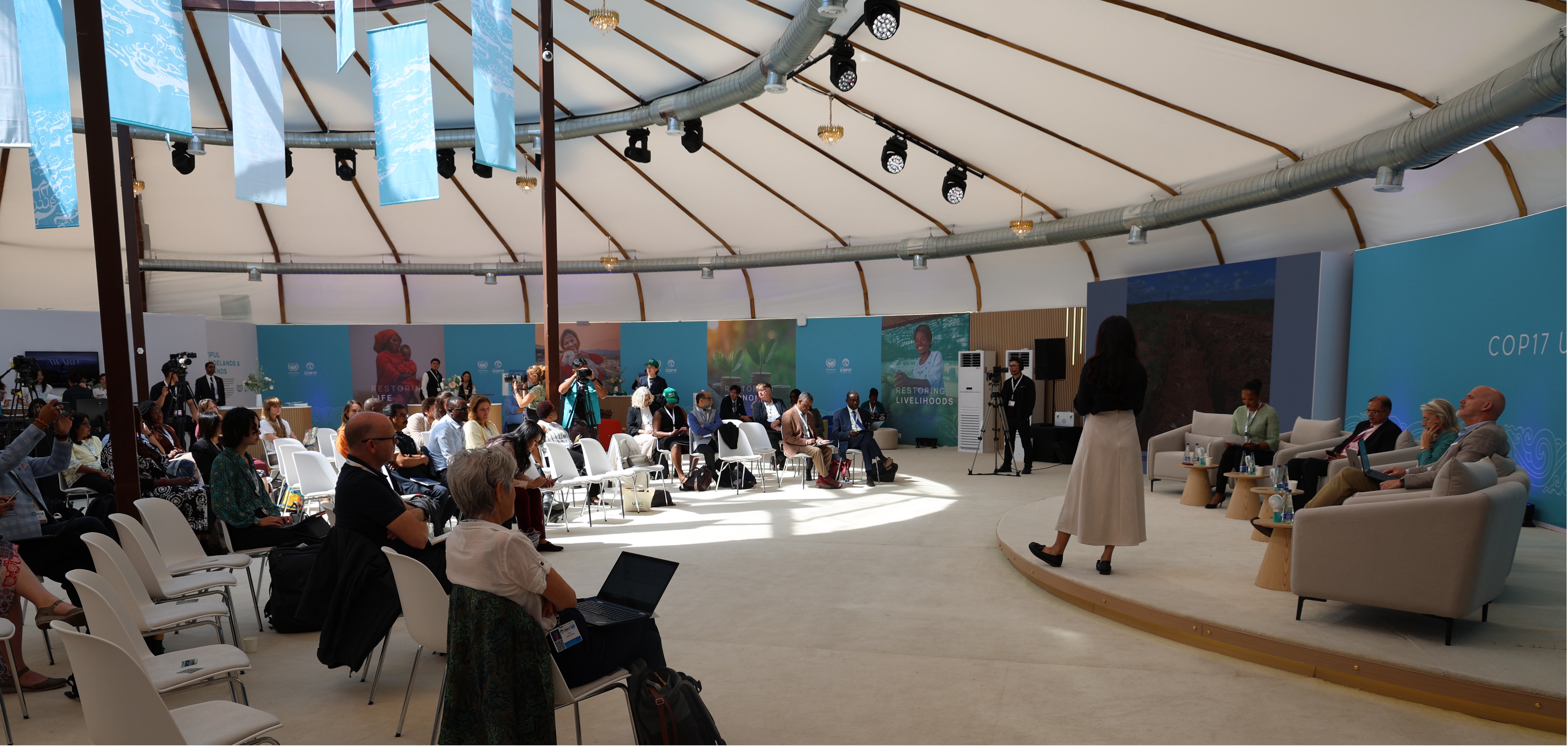
The Flagship Innovations for Resilient Landscapes session showed that many of the tools needed to restore land already exist. Speakers presented rangeland investment models, satellite-based land monitoring, incentives for farmers restoring trees, smart tools to detect irrigation needs, women-led grass seed banks and young restoration entrepreneurs.
The discussion also exposed why good ideas often remain small. Technologies need finance, locally available services, enabling policies, trusted institutions and community leadership. The task is to assemble proven innovations into packages that fit each landscape and can endure beyond short project cycles.
Watch the session
|
|
|
2. Building a practical partnership for multifunctional landscapes |
|
|
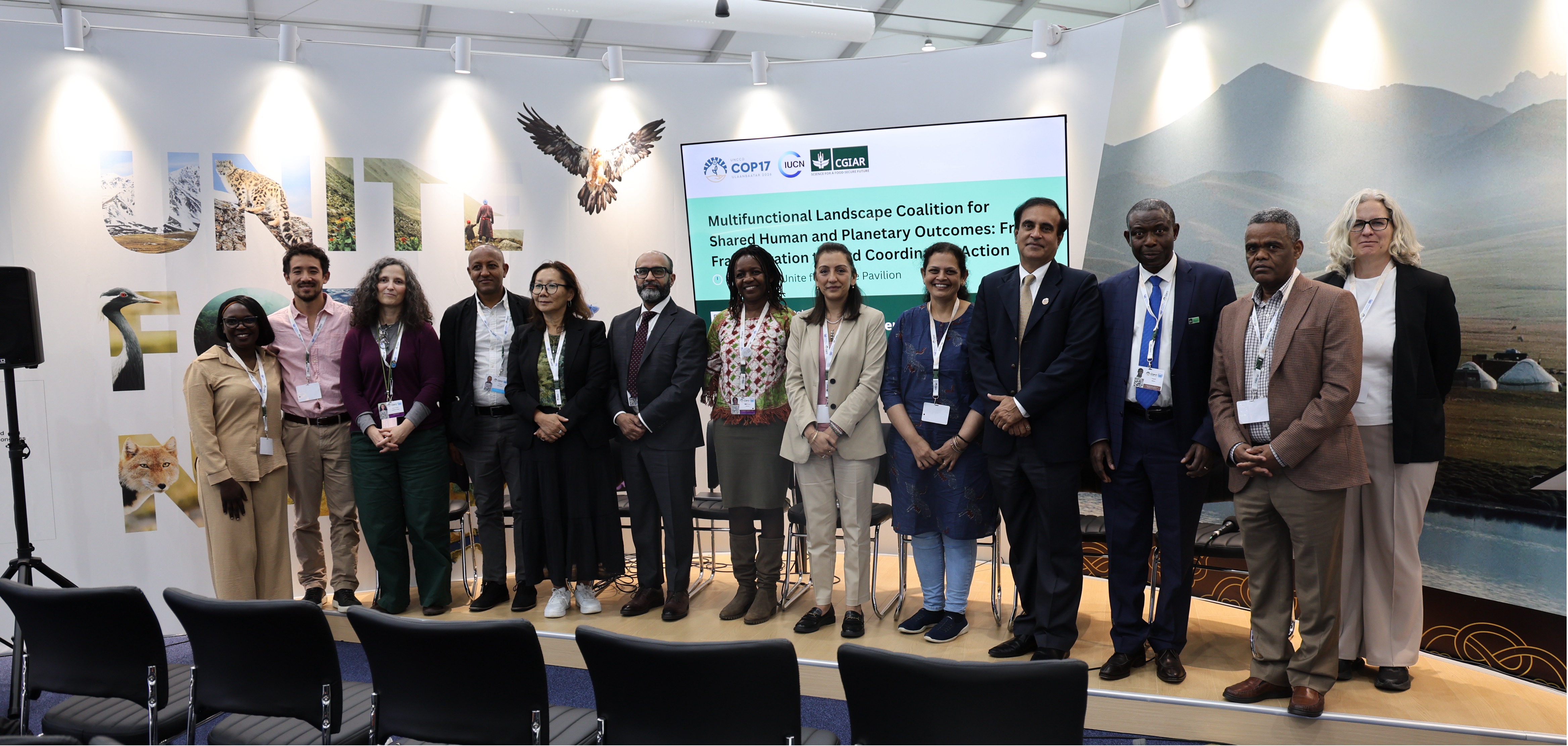
At the Multifunctional Landscape Coalition for Shared Human and Planetary Outcomes session, CGIAR brought together representatives of landscape networks, research organisations, development finance institutions and implementation platforms, including Commonland, Ambition Loop, Asian Development Bank, IFAD and 1000 Landscapes.
Participants called for a practical space that connects existing networks, makes their tools and knowledge easier to combine, and supports joint research, advocacy, learning and investment. Next steps include mapping current initiatives, agreeing on shared language and indicators, and testing collaboration in a specific landscape. CGIAR will consolidate the ideas into an initial action plan for partners.
Watch the session
|
|
|
3. Moving restoration from evidence to investable action |
|
|
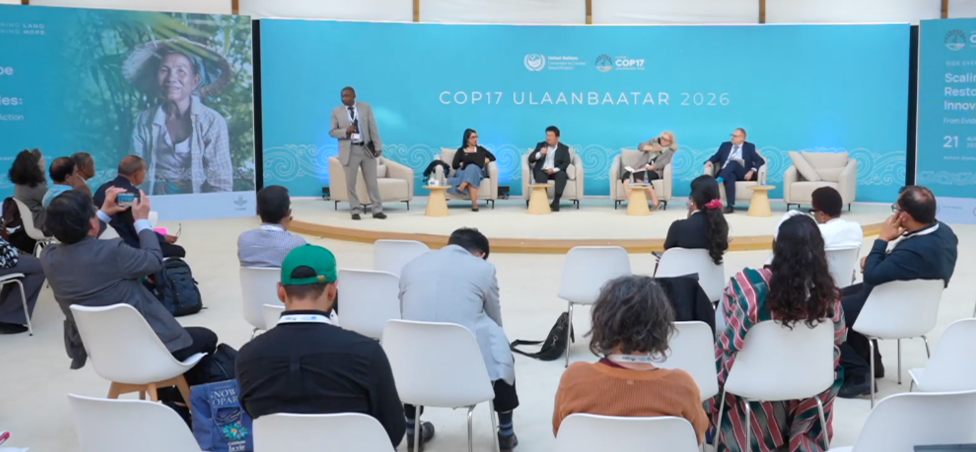
Two further sessions examined what it takes to move beyond successful pilots. Scaling Landscape Restoration Innovation Bundles drew on experiences from Spain, India and Tunisia to show how restoration can combine ecological recovery with markets, jobs, local enterprise, governance and viable livelihoods.
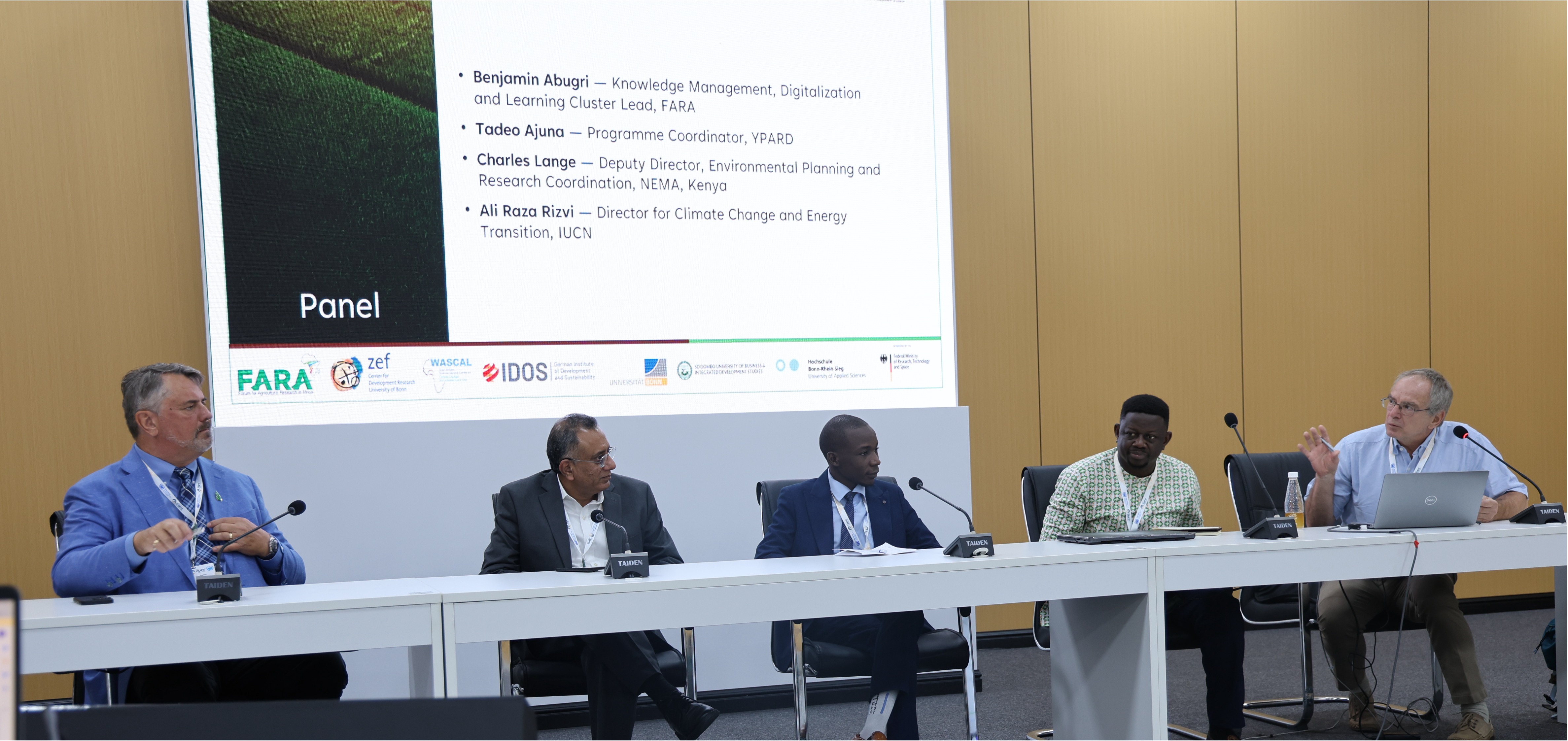
A CGIAR and GGGI session on bridging the science-policy-finance gap reached a related conclusion: countries are not starting from zero. Evidence, community experience, policy commitments and financing instruments already exist. The priority is to connect them around country and landscape needs, strengthen institutional capacity and replace fragmented projects with longer-term programmes.
Watch Scaling Landscape Restoration Innovation Bundles
|
|
|
Beyond the pavilion: developments shaping the wider COP |
|
|
The first week also brought wider developments that matter to CGIAR’s work and the communities our science serves.
From the opening day, Parties began formal work on drought, implementation and finance. Discussions then moved into questions of capacity, knowledge sharing and the future of the UNCCD Science-Policy Interface. These processes will help determine how countries access evidence, monitor progress and translate COP decisions into national and local action. Read the Week One negotiation coverage.
Local governments also claimed a stronger place in the land agenda. The Ulaanbaatar Declaration, adopted at the COP17 Mayors’ Forum, calls for more structured participation by cities and regions, stronger alignment across land, climate, biodiversity and water agendas, and more direct access to finance. The accompanying Ulaanbaatar Initiative will test how cities can measure and report land degradation, with results expected to be shared by COP18.
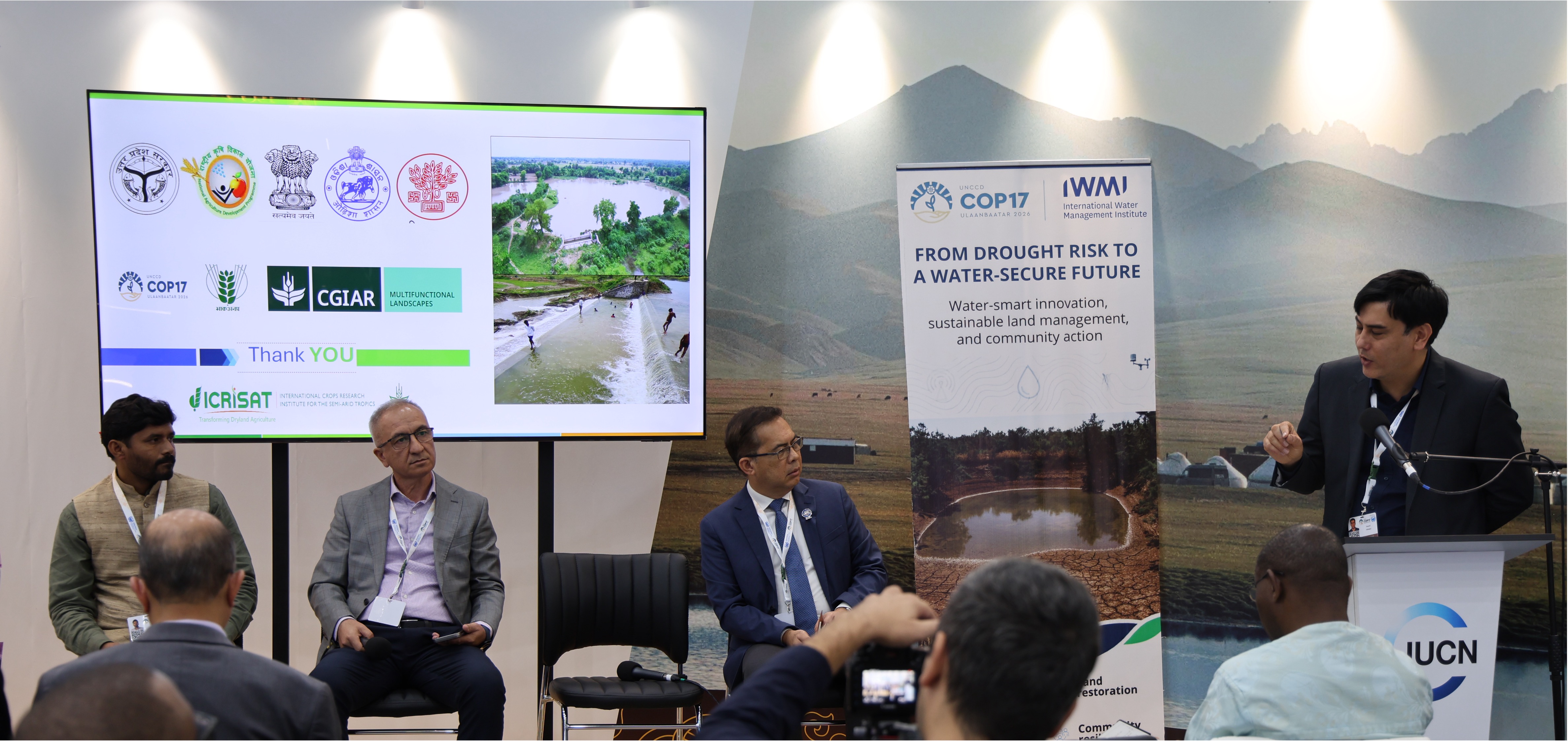
Rangeland finance also moved towards a practical mechanism with the launch of the STELARR Rangeland Restoration Investment Hub. Led by ILRI with IUCN and other partners, the Hub is designed to connect credible restoration opportunities with investors while strengthening the role of pastoralist and producer organisations in developing investment cases and financing models.
|
|
|
Negotiations are continuing, and the final outcomes will only become clear during Week Two. Two discussions were particularly relevant to CGIAR’s work. |
|
|
Rangelands and pastoralists
Parties showed broad support for giving rangelands and pastoralists greater prominence within the UNCCD agenda, including through the proposed Rangelands Flagship Initiative. Discussions emphasised stronger science and monitoring, sustained finance, secure tenure, pastoralist participation and better alignment across the Rio Conventions.
CGIAR called for public-private-community partnerships, secure tenure and inclusive governance, with rangeland stewards recognised as leaders in restoration. Our intervention also identified opportunities to mobilise private and blended finance through livestock value chains, improve monitoring, including soil organic carbon, and coordinate action on invasive alien plant species.
|
|
|
Agricultural land and soil degradation
In the Committee on Science and Technology, Parties called for integrated approaches to soil health and agricultural land management. Priorities included diversified farming systems, technology transfer, predictable finance for smallholders, secure tenure and inclusive governance. Digital tools and AI were also discussed, alongside scientific assessment and locally relevant approaches.
CGIAR stressed that land, soil and water must be managed together. We highlighted soil health, integrated land and water management, agroecology, agroforestry, biodiversity and climate-resilient agriculture as complementary approaches. CGIAR also called for stronger national soil-health monitoring, institutional coordination, local participation, capacity sharing and access to finance.
|
|
|
|
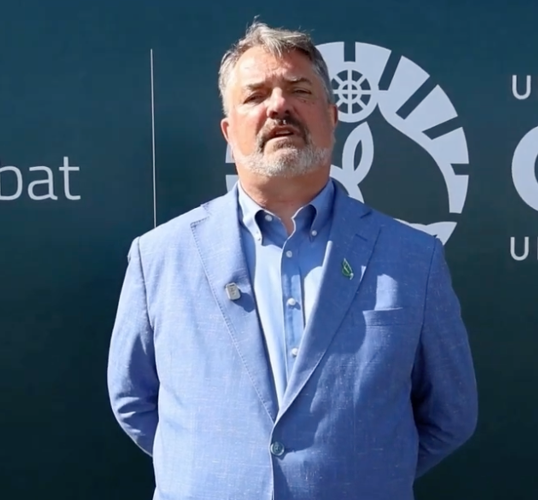
Dr Stanford Blade, Deputy Director General for Research and Innovation at ICRISAT and leader of the CGIAR delegation, explains why CGIAR’s 2025-2030 Science Portfolio places land restoration and soil health at its core, and why land, water and food challenges must be addressed as a connected system.
Watch the interview
|
|
|
The high-level segment begins as negotiations continue and attention turns towards finance and implementation. CGIAR will contribute to discussions on |
|
|
09:00–10:30 | IUCN Pavilion, Blue Zone
|
|
|
11:00–12:00 | IUCN Pavilion, Blue Zone |
|
|
-
High-Level Event: Transforming Agricultural Water Management for Drought Resilience and Food Security
|
11:30–13:00 | MET-24, Blue Zone |
|
|
15:30–16:30 | IUCN Pavilion, Blue Zone |
|
|
26 August | Land and People Day |
11:00–12:00 | IUCN Pavilion, Blue Zone |
|
|
27 August | Food Systems and Soil Health Day |
11:00–12:00 | IUCN Pavilion, Blue Zone |
27 August | Food Systems and Soil Health Day |
|
|
15:00–17:30 | MET-24, Blue Zone |
|
|
You are receiving this newsletter because you are part of the CGIAR Multifunctional Landscapes community or have expressed interest in our work.
To receive future editions and updates, please sign up here.
If you prefer not to receive further communications, you may opt out here. |
CGIAR – The largest global agricultural innovation network. |
|
|
CGIAR MFL research is being implemented by a multi-disciplinary team of researchers and other specialists, which includes CGIAR researchers from the Alliance of Bioversity and CIAT, CIMMYT, CIP, ICARDA, IFPRI, ILRI, IITA, IWMI and WorldFish as well as researchers from CIFOR and ICRAF; CIRAD; and various national and local partner organizations, in the target countries. The Programme also cooperates with key partners for scaling and impact and national authorities. CGIAR MFL is part of the CGIAR 2030 Research and Innovation Portfolio focuses on transforming food, land, water, and ecosystems. By treating landscapes as the unit of transformation, MFL generates actionable science through Multifunctional Living Landscapes, where integrated solutions are co-designed, governed, financed, and measured with partners.
|
CGIAR @ 2026. All rights reserved. |
|
|
|